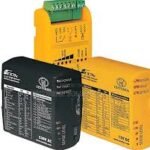
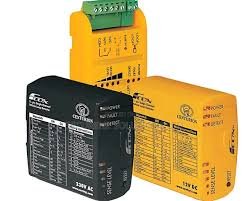
The Centurion FLUX inductive loop detector senses vehicles over a wire loop cut into the road surface. It sends a signal to a gate motor, boom barrier or access control system when a vehicle arrives, stays or leaves. The FLUX range comes in two formats. The FLUX SA is a standalone unit with removable screw terminals. The FLUX 11 plugs into a standard 11-pin base.
In short, the Centurion FLUX loop detector adds safe, automatic vehicle detection to gates and barriers. Its 4ms detection time, 15–1500µH tuning range and 10kA lightning protection suit residential, commercial and industrial sites.
How the Centurion FLUX Loop Detector Works
An inductive loop is a coil of wire laid in a slot in the road. The Centurion FLUX detector passes a high-frequency signal through this loop. As a result, the loop creates a magnetic field above the ground.
When a vehicle drives over the loop, its metal body changes the loop’s inductance. The FLUX detector measures that change. Then, once the change passes the set sensitivity threshold, the detector switches its output relay. The gate or barrier controller reads that relay and responds.
For example, the signal can:
- Keep a boom barrier raised while a car is over the loop
- Open an exit gate automatically as a vehicle approaches
- Count vehicles entering a car park
- Trigger a camera or ANPR system
Detection Speed and Loop Frequency
The Centurion FLUX loop detector responds quickly. Detection time is 4ms at a 100kHz loop frequency. At 40kHz, detection time is 10ms.
The loop frequency depends on the loop size and the number of turns. In addition, a frequency DIP switch on the FLUX SA lowers the frequency by about 25%. This matters where two loops sit close together. For instance, an entry loop and an exit loop at the same gate can interfere with each other, known as crosstalk. Shifting one detector’s frequency stops that.
On power-up or reset, the green Detect LED flashes. Each flash represents about 10kHz. Therefore, an installer can read the approximate loop frequency without extra tools.
Self-Tuning Range and Sensitivity
The Centurion FLUX self-tunes to loops between 15µH and 1500µH. This wide range covers small single-lane loops as well as large loops for wide gates.
Sensitivity is set with two DIP switches on the FLUX SA:
- High: SENS 1 OFF, SENS 2 OFF
- Medium-high: SENS 1 OFF, SENS 2 ON
- Medium-low: SENS 1 ON, SENS 2 OFF
- Low: SENS 1 ON, SENS 2 ON
Furthermore, Centurion’s firmware update roughly doubled the detection sensitivity of earlier FLUX units. Consequently, the detector can pick up high-clearance metal, such as truck trailers. The FLUX 11 offers settings from Low up to Super High.
Automatic Sensitivity Boost (ASB)
Trucks with trailers create a common problem. The cab is detected, but the gap between cab and trailer sits higher off the ground. A standard detector may lose the vehicle at that point. As a result, a barrier could start to close on the trailer.
The Automatic Sensitivity Boost solves this. Once a vehicle is detected, ASB raises sensitivity temporarily. Then, after the vehicle leaves the loop, sensitivity returns to the set level. This makes the Centurion FLUX suitable for logistics yards, warehouses and industrial gates.
Output Modes: Presence and Pulse
The FLUX SA output relay can work in two modes.
- Presence mode: the relay stays switched while a vehicle is on the loop. This is the standard safety setting for barriers.
- Pulse mode: the relay gives a short pulse. A Detect/Undetect switch selects whether the pulse fires when the vehicle enters or leaves the loop.
By default, the Centurion FLUX tunes out a vehicle that stays on the loop for five minutes. This stops a parked object from holding the gate open forever. However, the Permanent Presence switch keeps the output active for as long as the vehicle remains. In that mode, the loop needs a manual reset after environmental changes.
The relay is rated at 1A at 125V AC. It is fail-safe in N/O configuration. In other words, the relay closes on a loop fault or power loss. Therefore, a barrier wired this way stays up rather than dropping onto a vehicle.
Filter, Run and Buzzer Switches
The FLUX SA includes further DIP switches for site tuning.
- Filter: adds a 2-second delay before the output switches. This reduces false triggers from fast-moving objects passing near the loop.
- Run: OFF halts the detector and holds the relay in the detected state. For example, this keeps a boom raised during maintenance.
- Buzzer enable: turns the audible indicator on or off.
Diagnostics: LEDs and Buzzer
Loop faults are a frequent cause of gate callouts. The Centurion FLUX loop detector shows its status clearly.
- Power LED (red): on when power is present and the controller is running
- Loop Fault LED (red): flashes for an open circuit; stays on for a short circuit
- Detection level (5 red LEDs): show how close the signal is to the detection threshold
- Detect LED (green): on when a vehicle is detected
In addition, the buzzer changes tone as metal approaches the loop. It becomes continuous on detection. It also uses tone patterns for faults:
- Two short and one long tone: open circuit or high inductance
- One short and one long tone: short circuit or low inductance
Consequently, an installer can test a new loop by driving over it and listening. No multimeter is needed for a first check.
Surge and Lightning Protection
The Centurion FLUX uses an isolation transformer with 10kA lightning protection. Loops are long wires buried in the ground. Therefore, nearby lightning strikes can induce surges in them. The isolation transformer limits damage to the detector electronics.
This is relevant in Kenya. Areas such as Kisumu, Kakamega and Kericho see frequent thunderstorms. In addition, unstable KPLC supply can add mains-side surges at gate installations.
Power Supply Options
The FLUX SA accepts a wide supply range:
- 10V to 40V DC
- 7V to 28V AC
Standby current is 50mA. As a result, the FLUX SA can run from the 12V or 24V supply already inside most gate motors and barriers. For example, it can share the battery-backed supply of a gate operator during power cuts.
The FLUX 11 comes in a 12–24V DC version (FLUX1100V1) and a 220–240V AC version (FLUX1101V1). The AC version can run directly from Kenyan mains.
FLUX SA vs FLUX 11
| Feature | FLUX SA | FLUX 11 |
|---|---|---|
| Format | Standalone, removable screw terminals | Plugs into a standard 11-pin base |
| Supply | 10–40V DC / 7–28V AC | 12–24V DC or 220–240V AC versions |
| Sensitivity range | Low to High | Low to Super High |
| Typical use | Inside gate motors and barrier cabinets | DIN-rail panels with 11-pin bases, replacing other 11-pin detectors |
Installation Notes
The FLUX detector housing is rated IP50. It is not weatherproof. Therefore, mount it inside the gate operator, barrier cabinet or a sealed control box.
The removable connectors simplify maintenance. For instance, a faulty unit can be swapped without rewiring the loop. Also, Centurion firmware can be updated through the bootloader interface.
Who Is the Centurion FLUX Loop Detector Best Suited For?
- Gate and barrier installers – The 15–1500µH self-tuning range covers loops of different sizes without manual matching. In addition, the buzzer and five detection-level LEDs speed up commissioning on site.
- Estates, apartments and gated communities – Presence mode with the fail-safe N/O relay keeps barriers raised over vehicles. This reduces the risk of a boom dropping onto a car.
- Logistics yards, warehouses and factories – Automatic Sensitivity Boost holds detection across truck and trailer gaps. Higher sensitivity settings also detect high-clearance vehicles.
- Car parks, malls and hospitals – The 4ms detection time handles steady traffic. Meanwhile, the frequency switch prevents crosstalk between adjacent entry and exit loops.
- Sites in storm-prone areas – The isolation transformer with 10kA lightning protection reduces surge damage from buried loop cables.
- Maintenance technicians – Removable terminals, a reset button and buzzer fault codes cut fault-finding time during service calls.
Frequently Asked Questions
What does a Centurion FLUX inductive loop detector do? It detects vehicles over a buried wire loop and switches a relay. The relay signals a gate motor, barrier or access control system.
What is the difference between the FLUX SA and FLUX 11? The FLUX SA is a standalone unit with screw terminals. The FLUX 11 plugs into a standard 11-pin base.
Can the Centurion FLUX run from a gate motor’s 12V supply? Yes. The FLUX SA works from 10–40V DC or 7–28V AC, with 50mA standby current.
Will the Centurion FLUX detect trucks with trailers? Yes. Automatic Sensitivity Boost raises sensitivity after detection, so the trailer section stays detected.
Is the Centurion FLUX loop detector weatherproof? No. It is rated IP50. Install it inside a gate operator, barrier housing or sealed enclosure.